
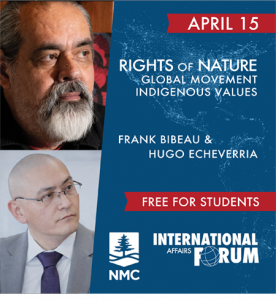
 What if rivers, lakes, fish, and ecosystems had legal rights? The International Affairs Forum will further the conversation on the global Rights of Nature movement, rooted in Indigenous principles, with ecological values relevant to northern Michigan. This global movement has echoes in recent local successes like the rewilding of the Boardman-Ottaway River and the region’s long-standing commitment to habitat and watershed stewardship.
This program is supported by IAF members with grant funding provided by Grand Traverse Band of Ottawa & Chippewa Indians, and event underwriting by the Grand Traverse Regional Community Foundation.
Tribal Attorney Frank Bibeau, Director of the Tribal Rights of Nature Program at the Center for Democratic and Environmental Rights (CEDR), will explore how Indigenous legal frameworks are advancing Rights of Nature in the U.S. through treaty rights, sovereignty, and environmental protection. According to the CEDR, Bibeau “has developed several legal defense strategies based on the Rights of Manoomin and represented Manoomin (wild rice) and the White Earth Band of Ojibwe in Manoomin v DNR in White Earth Tribal Court and DNR v White Earth Band of Ojibwe and Chief Judge DeGroat in Minnesota District Court and the Eighth Circuit Court of Appeals (2021-2022). Frank’s legal work focuses on the Treaty rights of tribes and members to help protect the natural resources for future generations.
Providing global context, environmental lawyer and activist Hugo Echeverría (CEDR) will examine Ecuador’s constitutional Rights of Nature experience, showing how this framework has been applied—and tested—internationally. Echeverría is best known for advancing Ecuador’s historic constitutional recognition of nature as a rights-bearing entity. With the CEDR, he has shaped legislation, influenced court decisions, and helped communities apply these protections in practice. Rooted in sumak kawsay, from the Quechua meaning “living in harmony with nature”, his work ensures ecosystems are treated not as property, but as subjects of law with enforceable rights to protection and restoration.
The discussion will offer insights into how legal and cultural approaches can shape environmental stewardship, the protection of ecosystems, and the evolving understanding of human responsibility to the natural world.
When: April 15, 6 p.m. reception, 7 p.m. program in-person and livestream
Where: Milliken Auditorium, Dennos Museum Center
Tickets: Admission is free for current students and educators, including NMC and area secondary schools, and all enrolled citizens of the Grand Traverse Band of Ottawa and Chippewa Indians. Get your tickets at tciaf.com. Advance purchase of in-person or online tickets recommended.