Mar 16, 2021 | Intercom, Student News
March 17, 2021
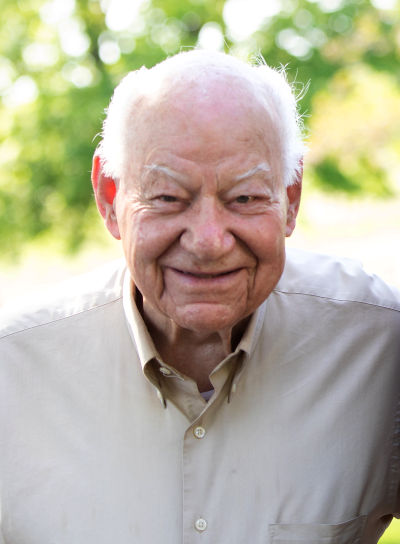 For more than three decades, Traverse City resident Dick Grout (right) has pushed NMC’s mission to provide lifelong learning opportunities to its outer limits.
The 100-year-old World War II veteran’s Extended Education class records go back to 1988. He’s currently enrolled in a class on the history of U.S. presidents. It’s one of several Grout has taken from Jack Segal, who at 75 was born the year the war ended, in part thanks to Grout’s service.
“I just think it’s important to keep challenged mentally,” said Grout, a widower who lives at the Cordia senior living residential community in Traverse City. “I don’t want to sit here by myself and vegetate. I want to be involved with other people.”
Since COVID hit, Extended Education classes have been virtual, but Grout’s taken the videoconferencing technology in stride.
“We certainly would rather be in person, (but) there’s all kinds of ways to get together,” he said.
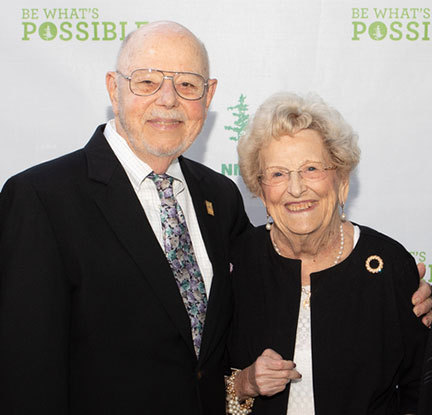 Ken Pickering and Jeane PoosGrout’s not the only centenarian student at Extended Education, either. Jeane Poos turns 100 this month. She and her devoted partner Ken Pickering, 95, have a lengthy transcript of EES classes between them. They too have taken Segal’s classes, as well as culinary courses, art and music and getting the most from your iPhone. They’ve been on the instructor side, too, presenting on their travels including a trip to Norway and Russia at Extended Ed’s twice-annual Campus Days.
“We had two rooms full of 50 people,” Pickering recalls.
Poos in fact has created a planned gift for Extended Education so that others may take advantage of the opportunities it offers to all learners, from age 4 to 100, at least.
Visit nmc.edu/ees for information on current classes. Visit nmc.edu/give to find out about planned and other giving opportunities.
Listen to an interview Grout did with the International Affairs Forum at NMC, which he formerly chaired, to commemorate the 75th anniversary of World War II.
Mar 16, 2021 | Intercom, Student News
 Thursday, March 18, 8–9:30 a.m.
Protecting Our Mental Health
Registration deadline is noon Wednesday, March 17. RSVP here.
Learn more here: gvsu.edu/hfnorthernmich/
The virtual Health Forum of Northern Michigan, a collaboration of Grand Valley State University, Grand Valley Traverse City Regional Center and Northwestern Michigan College, places a special focus on serving rural health needs in Northern Michigan. The Health Forums are offered twice a year, in spring and fall, and are focused on issues related to rural health. The subject of Thursday’s Health Forum is Protecting Our Mental Health.
Mar 15, 2021 | Student News
Good afternoon NMC students,
As you may have noticed from the increase in emails you have received regarding possible COVID-19 exposures, cases of the virus are rising on campus. While NMC has had relatively few cases in total, it’s critical that we all stay safe between now and the end of the semester to keep it that way. Please continue to follow NMC’s safety protocols on campus including:
- wear a mask
- practice social distancing
- limit social gatherings
- follow current MDHHS guidelines regarding size of gatherings and number of households
- do not come to campus or attend any in-person courses if you are sick
- if you must travel, when you return please monitor for symptoms, and consider self-quarantining for up to 10 days.
Most students will not be able to get vaccinated until later this year, so it’s important to stay safe. You have been doing a great job! We only have a little ways to go! With your help we will get there and limit the impact of COVID-19 on our NMC community.
Mar 15, 2021 | Intercom, Student News
We’re unveiling our new collection of graphic novels and comic books at the library this month, and it’s a perfect opportunity to look at the plethora of women’s contributions and feminist representations within this medium, as well as some critical analysis of the fraught history of gender within comics. Join us, with these recommendations from the library:
Books at the Library
A classic graphic memoir from the legendary Alison Bechdel. Bechdel’s comic strip “The Rule,” from her self-syndicated feminist comic, Dykes to Watch Out For, became well-known for introducing what became known as “The Bechdel Test,” a tongue-in-cheek rule for evaluating representations of women in films and other media. (more…)
Mar 4, 2021 | Student News
Millions of additional college students are now eligible for federal Supplemental Nutrition Assistance Program (SNAP) benefits due to a provision in the latest round of federal coronavirus relief aid. Learn more here and read eligibility requirements here.
Mar 2, 2021 | Student News
 Are you experiencing symptoms of COVID-19?
- New congestion or runny nose that cannot be attributed to another health condition
- New cough that cannot be attributed to another health condition
- New sore throat that cannot be attributed to another health condition
- New fever of 100.4 F (or higher) or sense of having a fever
- New muscle aches that cannot be attributed to another health condition
- New shortness of breath that cannot be attributed to another health condition
- Loss of taste or smell
If so, please call Student Health Services at (231) 995-1255, Monday through Friday between 9 a.m. and 4 p.m.
Feb 26, 2021 | Intercom, Student News
To find these selections and many other new titles, see the NMC library catalog.
 A Children’s Bible by Lydia Millet
This novel follows a group of children and their families on summer vacation at a lakeside mansion. The teenage narrator Eve and the other children are contemptuous of their parents, who spend the days and nights in drunken stupor. Named for a picture Bible given to Eve’s little brother Jack, A Children’s Bible is loosely structured around Bible stories intended for young readers. In A Children’s Bible, Millet offers brilliant commentary on the environment and human weakness. (more…)
Feb 24, 2021 | Intercom, Student News
 Dr. Nick Nissley (click for high-resolution version)TRAVERSE CITY — Northwestern Michigan College President Nick Nissley has been named a winner of the Paragon award for new presidents by Phi Theta Kappa, the international community college honor society.
Nissley is among 22 recipients out of 500 eligible college presidents, and one of only two in Michigan. Paragon awards are bestowed upon college presidents in the first three years of their tenure who have shown strong support of student success by recognizing academic achievement, leadership, and service among high-achieving students at their college. Recipients were nominated for the award by students on their campus. Nissley became president of NMC on Jan. 1, 2020.
In the nomination, NMC students commended Nissley for including all students, not just PTK members, in his work to instill a “possibilitarian” culture on campus, even amid the challenges of COVID-19.
“From our first in-person meeting, Dr. Nissley laid a foundation of open communication by sharing his very personal testimony with students.His inclusion of students in events, discussions, and decisions proves to us again and again, he is focused on our success. While we are thrilled with his support, similar support has been shared with other student groups. He is a champion for student success.”
Nissley and other Paragon winners will be recognized at the PTK annual convention, broadcast live from Orlando, Fla., April 8–10. NMC’s chapter, Alpha Rho Pi, will also receive a Reach award at the convention for its membership growth in 2020.
According to PTK, member students have a 91 percent student success rate, and research has shown that strong presidential leadership and support of PTK increases member success and the depth of their college experience.
Release date: FEBRUARY 24, 2021
For more information:
Diana Fairbanks
Executive Director of Public Relations, Marketing and Communications
dfairbanks@nmc.edu
(231) 995-1019
NON-DISCRIMINATION POLICY NOTICE
Northwestern Michigan College is committed to a policy of equal opportunity for all persons and does not unlawfully discriminate on the basis of race, color, national origin, religion, disability, genetic information, height, weight, marital status or veteran status in employment, educational programs and activities, and admissions. nmc.edu/non-discrimination
Feb 24, 2021 | Intercom, Student News
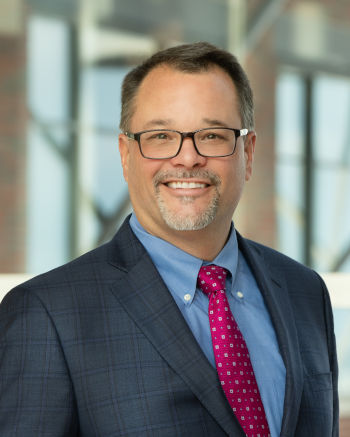 Dr. Nick Nissley (click for high-resolution version)TRAVERSE CITY — Northwestern Michigan College President Nick Nissley has been named a winner of the Paragon award for new presidents by Phi Theta Kappa, the international community college honor society.
Nissley is among 22 recipients out of 500 eligible college presidents, and one of only two in Michigan. Paragon awards are bestowed upon college presidents in the first three years of their tenure who have shown strong support of student success by recognizing academic achievement, leadership, and service among high-achieving students at their college. Recipients were nominated for the award by students on their campus. Nissley became president of NMC on Jan. 1, 2020.
In the nomination, NMC students commended Nissley for including all students, not just PTK members, in his work to instill a “possibilitarian” culture on campus, even amid the challenges of COVID-19.
“From our first in-person meeting, Dr. Nissley laid a foundation of open communication by sharing his very personal testimony with students.His inclusion of students in events, discussions, and decisions proves to us again and again, he is focused on our success. While we are thrilled with his support, similar support has been shared with other student groups. He is a champion for student success.”
Nissley and other Paragon winners will be recognized at the PTK annual convention, broadcast live from Orlando, Fla., April 8–10. NMC’s chapter, Alpha Rho Pi, will also receive a Reach award at the convention for its membership growth in 2020.
According to PTK, member students have a 91 percent student success rate, and research has shown that strong presidential leadership and support of PTK increases member success and the depth of their college experience.
Release date: FEBRUARY 24, 2021
For more information:
Diana Fairbanks
Executive Director of Public Relations, Marketing and Communications
dfairbanks@nmc.edu
(231) 995-1019
NON-DISCRIMINATION POLICY NOTICE
Northwestern Michigan College is committed to a policy of equal opportunity for all persons and does not unlawfully discriminate on the basis of race, color, national origin, religion, disability, genetic information, height, weight, marital status or veteran status in employment, educational programs and activities, and admissions. nmc.edu/non-discrimination
Feb 23, 2021 | Student News
Students: please remember that Spring Break has been canceled this year and classes will be held Monday, March 29 through Thursday, April 1. Friday, April 2, remains a college holiday with no classes scheduled and the college closed for the day.
Spring semester classes will conclude on Monday, April 26. Instructors may use the rest of the week to meet with their students at the faculty’s discretion. Grade submission deadlines will remain as scheduled.
You can view the complete spring and summer course schedule here and view the Academic Calendar here.
Feb 19, 2021 | Student News
 In partnership with Northwest Michigan Works, NMC’s 15th annual Career Fair will be held virtually March 2–4, 2021 from 3–6 p.m. each day.
The Career Fair is a great place to meet employers. Representatives from 70 companies across the region will be in attendance to meet potential employees and increase awareness of their organization. The event is open to students, alumni and community members.
Each day is broken down by industry: March 2nd is Retail, Food Service & Hospitality, March 3rd is Healthcare, Business & Other, March 4th is Construction, Automotive, Technical, Transportation & Manufacturing. Following each event daily, alumni and students can take part in a networking hour from 6–7 p.m. via zoom.
Feb 19, 2021 | Student News
Good morning NMC students,
We hope you’re having a successful semester and staying healthy. Despite the recent cold and snow, we are busy planning ahead for the summer and fall semesters at NMC and want to help you be prepared.
Based on feedback from students, the college will expand its offerings of face-to-face classes. NMC will offer some sections of developmental education courses face-to-face, in addition to hybrid and livestream formats. For the new face-to-face sections, classrooms will be equipped with plexiglass dividers so group work can also be done safely. NMC will also continue to offer select occupational courses and labs face-to-face, as we have since last summer. For all face-to-face classes students must still follow all safety protocols including wearing masks and practicing social distancing.
NMC is also exploring the use of new camera technology to offer hybrid classes in the HyFlex model. In HyFlex, a class is split into two groups that alternate between on-campus and zoom formats to reduce in-person class size.
These adjustments continue NMC’s commitment to keeping our students and employees safe, while limiting the disruption to learning as much as possible. One of the most important factors in achieving this goal is hearing from you. We recently emailed you a course format survey to better understand how you prefer to learn. The short survey is open until Sunday evening. Please take a few minutes to complete it so we can work to meet your needs. Based on your input and safety guidelines, changes may be made to the schedule. We ask that you monitor your NMC email and the schedule throughout the summer.
The summer and fall schedules are available to help you plan. Registration for summer is open, and fall registration begins March 10th. Our Academic and Career Advising Center team is ready to help you. Watch your NMC email for information about your assigned advisor and to schedule a virtual advising appointment.
Thank you to the NMC faculty and staff on the “Reimagining Committee” for their work in helping address these complex issues and thank you for remaining committed to achieving your goals. We can now see a future beyond the pandemic and we will get there together.
—
NMC Public Relations
Feb 18, 2021 | Intercom, Student News
NMC has received emergency funds for students as part of the Coronavirus Response and Relief Supplemental Appropriations Act (CRRSAA) to provide emergency help with educational costs (tuition, fees, housing, food, transportation, books, supplies, or loan fees) or emergency costs due to coronavirus, such as health care (including mental health), technology, or child care.
Who Is Eligible?
- Students who did not already receive an automatic CRRSAA award the week of February 8, 2021 (if unsure, check NMC Self-Service / Student Billing / Account Summary)
- Students who are currently enrolled in Spring semester
- Students with expenses related to the coronavirus pandemic, including educational costs (tuition, fees, housing, food, transportation, books, supplies, or loan fees) or emergency costs due to coronavirus, such as health care (including mental health), technology, or child care.
- For CRRSAA funds, you must be a U.S. Citizen or eligible non-citizen; however, we have NMC emergency funds available for non-citizens. Please apply if you have need.
What Should I Do?
If you qualify based on the above criteria: Apply for Emergency Aid here.
Aid will be awarded in the order of application.
The amount will be based on:
- number of credits enrolled
- availability of funds
If you have any questions or concerns, please contact Student Financial Services at sfs@nmc.edu.
As always we are here to assist you to make sure you are able to benefit from all aid that you are eligible for.
Feb 17, 2021 | Intercom, Student News
February 17, 2021
 After investing more than 10 years in pursuit of her associate degree, the pandemic almost brought psychology student Brandee Sasser-Drone (left) to her breaking point, but federal aid distributed by NMC has kept her on track to graduate this semester and continue toward a bachelor’s degree.
The 35-year-old mother of two has twice received emergency financial assistance, in the spring of 2020 and again just this month. This second round of COVID-19 aid is part of the $22.7 billion Congress allocated to higher education in the Coronavirus Response and Relief Supplemental Appropriations Act (CRRSAA) passed in December 2020. NMC received $4.1 million total, of which $1 million was earmarked for direct student aid.
Sasser-Drone received $1,200 of that, one of more than 900 NMC students who received funds this month based on financial need and enrollment status. The average award was $964.
“This last little bit of money, I paid bills that have been on the back burner since summer,” she said. “We’ve been living off of one cell phone, one car. I had to let car insurance lapse. Really vital, important things that NMC has helped us get back to a secure place.”
Nursing student Shelby Hansard, 26, who also received assistance in both rounds, agreed. She too juggles parenthood of an 18-month-old daughter with work as an LPN and school.
“The funds were helpful and allowed me to buy groceries for my family this month as well as a textbook that I really needed,” Hansard said.
The pandemic upset all Sasser-Drone’s financial security, from a paycheck to child support for her 11- and 8-year-old, and added demands like supervising their virtual education at home.
“All of our usual, consistent financial securities, as small as they were, they weren’t coming in,” she said. “I didn’t think I’d be able to finish school.”
The dean’s list student credits NMC psychology instructor Shiloh Smith for providing emotional support during the last semester.
“Shiloh kept me so motivated, so driven,” Sasser-Drone said. “I’m four-pointing my classes, which gives me a lot of pride.”
It’s also given her admission to Central Michigan University to finish her bachelor’s degree. She found out this week she was accepted to an online program starting this fall. She hopes to eventually work in mental health services within a law enforcement or correctional setting.
“I wouldn’t have been able to continue if it wasn’t for this help this year, and the NMC staff,” she said. “I highly recommend NMC to anyone who’s thinking about going to school.”
NMC developed a system to quickly and automatically distribute 85 percent of this round of student aid to those who qualified. An application process opens Thursday to award the remaining funds. Students will be notified directly how to apply, and the entire $1 million is expected to be distributed by mid-March.
The NMC Foundation’s Be What’s Possible campaign also has supported the emergency needs of students during the pandemic through the Fund for NMC. Give to the campaign here.
The $3 million NMC will receive in institutional funds this round must be used for expenses that are directly related to COVID. NMC will look at infrastructure improvements related to health and safety in buildings, and technology improvements.
“This financial support is critical to helping NMC meet the needs of the learners of our region” said Nick Nissley, NMC president. “In 2020, we pivoted quickly and made major changes to keep delivering education, while also keeping our students and employees safe, all without raising tuition. While we are proud of the work we’ve done to balance the budget so far, we know that some of those adjustments are one-time fixes. The pandemic will have a longer lasting impact on many industries, including higher education and we need to continue to look for ways to right the ship.”
Feb 16, 2021 | Intercom, Student News
TRAVERSE CITY — Northwestern Michigan College today announced it has received a $1 million commitment from community members Kim Hagerty and Antonio Simão to support the college’s greatest needs and scholarships through two funds. The Kim Hagerty and Antonio Simão gift will support the Fund for NMC, the college’s unrestricted fund, which enables the college to address the greatest needs of its programs and students, such as emergency student support, future program innovations, and more.
“As we’ve seen during the pandemic, the Fund for NMC gives the college the flexibility to pivot to meet the changing needs of our learners at this time and in the future,” said NMC President Nick Nissley.
Additionally, Kim Hagerty and Antonio Simão have committed part of this gift to the Hagerty-Simão Family Scholarship Fund, which will annually provide scholarships to approximately 20 students, with preference to those enrolled in NMC’s Aviation program or the Commitment Scholarship program. As an endowed scholarship fund, these annual scholarships will be available to students in perpetuity.
“This gift from Kim and Antonio will help so many students be successful in reaching their academic goals through NMC,” Nissley said.
Kim Hagerty said that they were inspired by the realization of how important the college is in this community. “Antonio and I have such great confidence in NMC and what it is doing to support students. We want to keep that going,” Hagerty said. “We are so happy to be able to make this commitment.”
This pledge is included as part of the Be What’s Possible campaign, a fundraising initiative for scholarships, programs, facilities, and the Fund for NMC (greatest needs) at NMC. To date the Be What’s Possible campaign has raised more than $34 million towards a goal of $35 million.
Kim Hagerty and her family have long-standing connections to the college. Kim Hagerty served on NMC’s Foundation board for 10 years and continues to serve as an honorary member. Antonio Simão first attended NMC Aviation in 2004, receiving private, seaplane, and instrument ratings.
NMC Aviation trains professional pilots for successful careers in the cockpit. Offering both two- and four-year degree options, over its five decades the program has trained thousands of pilots who have flown everywhere from the military to legacy airlines to the Alaskan bush. Today, NMC Aviation serves more than 150 students each year in both domestic and international exchange programs, and is also a recognized leader in the field of Unmanned Aerial Systems (UAS) training. Find out more at nmc.edu/aviation.
NMC’s Commitment Scholarship program promises a college education to selected northern Michigan ninth graders who are first-generation students, show academic promise and potential, and have financial need. Commitment provides mentoring and college preparatory activities during high school, and a tuition scholarship to NMC for up to 60 credits and/or three years, and has supported more than 1,500 students from across the region since 1993.
Release date: FEBRUARY 16, 2021
For more information:
Rebecca Teahen
Associate Vice President for Resource Development
Executive Director, NMC Foundation
rteahen@nmc.edu
(231) 995-1855
NON-DISCRIMINATION POLICY NOTICE
Northwestern Michigan College is committed to a policy of equal opportunity for all persons and does not unlawfully discriminate on the basis of race, color, national origin, religion, disability, genetic information, height, weight, marital status or veteran status in employment, educational programs and activities, and admissions. nmc.edu/non-discrimination
Feb 16, 2021 | Intercom, Student News
TRAVERSE CITY — Northwestern Michigan College today announced it has received a $1 million commitment from community members Kim Hagerty and Antonio Simão to support the college’s greatest needs and scholarships through two funds. The Kim Hagerty and Antonio Simão gift will support the Fund for NMC, the college’s unrestricted fund, which enables the college to address the greatest needs of its programs and students, such as emergency student support, future program innovations, and more.
“As we’ve seen during the pandemic, the Fund for NMC gives the college the flexibility to pivot to meet the changing needs of our learners at this time and in the future,” said NMC President Nick Nissley.
Additionally, Kim Hagerty and Antonio Simão have committed part of this gift to the Hagerty-Simão Family Scholarship Fund, which will annually provide scholarships to approximately 20 students, with preference to those enrolled in NMC’s Aviation program or the Commitment Scholarship program. As an endowed scholarship fund, these annual scholarships will be available to students in perpetuity.
“This gift from Kim and Antonio will help so many students be successful in reaching their academic goals through NMC,” Nissley said.
Kim Hagerty said that they were inspired by the realization of how important the college is in this community. “Antonio and I have such great confidence in NMC and what it is doing to support students. We want to keep that going,” Hagerty said. “We are so happy to be able to make this commitment.”
This pledge is included as part of the Be What’s Possible campaign, a fundraising initiative for scholarships, programs, facilities, and the Fund for NMC (greatest needs) at NMC. To date the Be What’s Possible campaign has raised more than $34 million towards a goal of $35 million.
Kim Hagerty and her family have long-standing connections to the college. Kim Hagerty served on NMC’s Foundation board for 10 years and continues to serve as an honorary member. Antonio Simão first attended NMC Aviation in 2004, receiving private, seaplane, and instrument ratings.
NMC Aviation trains professional pilots for successful careers in the cockpit. Offering both two- and four-year degree options, over its five decades the program has trained thousands of pilots who have flown everywhere from the military to legacy airlines to the Alaskan bush. Today, NMC Aviation serves more than 150 students each year in both domestic and international exchange programs, and is also a recognized leader in the field of Unmanned Aerial Systems (UAS) training. Find out more at nmc.edu/aviation.
NMC’s Commitment Scholarship program promises a college education to selected northern Michigan ninth graders who are first-generation students, show academic promise and potential, and have financial need. Commitment provides mentoring and college preparatory activities during high school, and a tuition scholarship to NMC for up to 60 credits and/or three years, and has supported more than 1,500 students from across the region since 1993.
Release date: FEBRUARY 16, 2021
For more information:
Rebecca Teahen
Associate Vice President for Resource Development
Executive Director, NMC Foundation
rteahen@nmc.edu
(231) 995-1855
NON-DISCRIMINATION POLICY NOTICE
Northwestern Michigan College is committed to a policy of equal opportunity for all persons and does not unlawfully discriminate on the basis of race, color, national origin, religion, disability, genetic information, height, weight, marital status or veteran status in employment, educational programs and activities, and admissions. nmc.edu/non-discrimination
Feb 12, 2021 | Intercom, Student News
To find these selections and many other new titles, see the NMC library catalog.
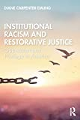 Institutional Racism and Restorative Justice: Oppression and Privilege in America
Author: Diane Carpenter Emling
Diane Emling, of Northwestern Michigan College, details America’s complex history of racism, demonstrating how it becomes embedded in society through land ownership, housing, education, health care, employment, public services, and criminal justice. For each of these issues, she suggests actions to restore justice. Directed at college undergraduate students and written in a comprehensive and accessible style, this book offers a much needed perspective on institutional racism. (more…)
Feb 11, 2021 | Intercom, Student News, Tech Tips
 If you’re tired of the constant barrage of ads all over the World Wide Web, then you will want to get uBlock Origin installed on your favorite web browser. uBlock Origin will stop videos from automatically playing on news sites and ads from appearing on YouTube when you need to show your class or coworkers information on the web.
 Fun Home: A Family Tragicomic by Alison Bechdel
