
To find these selections and many other new titles, see the NMC library catalog.
New Non-Fiction
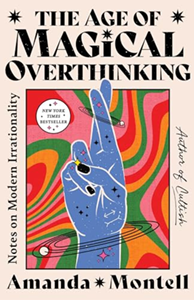 The Age of Magical Overthinking by Amanda Montell
Magical thinking’ can be broadly defined as the belief that one’s internal thoughts can affect unrelated events in the external world: Think of the conviction that one can manifest their way out of poverty, stave off cancer with positive vibes, thwart the apocalypse by learning to can their own peaches, or transform an unhealthy relationship to a glorious one with loyalty alone. In all its forms, magical thinking works in service of restoring agency amid chaos, but in this book, Montell argues that in the modern information age, our brain’s coping mechanisms have been overloaded, and our irrationality turned up to an eleven. Montell delves into a cornucopia of the cognitive biases that run rampant in our brains, from how the ‘Halo effect’ cultivates worship (and hatred) of larger than life celebrities, to how the ‘Sunk cost fallacy’ can keep us in detrimental relationships long after we’ve realized they’re not serving us.
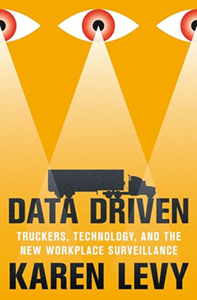 Data Driven by Karen Levy
Long-haul truckers are the backbone of the American economy, transporting goods under grueling conditions and immense economic pressure. Truckers have long valued the day-to-day independence of their work, sharing a strong occupational identity rooted in a tradition of autonomy. Yet these workers increasingly find themselves under many watchful eyes. This book examines how digital surveillance is upending life and work on the open road, and raises crucial questions about the role of data collection in broader systems of social control. Karen Levy takes readers inside a world few ever see, painting a bracing portrait of one of the last great American frontiers.
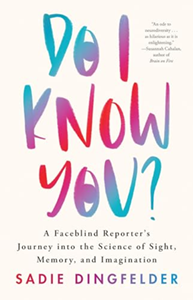 Do I Know You? Do I Know You? by Sadie Dingfelder
Science writer Sadie Dingfelder has always known that she’s a little quirky. But while she’s made some strange mistakes over the years, it’s not until she accosts a stranger in a grocery store (whom she thinks is her husband) that she realizes something is amiss. With a mixture of curiosity and dread, Dingfelder starts contacting neuroscientists and lands herself in scores of studies. In the course of her nerdy midlife crisis, she discovers that she is emphatically not neurotypical. She has prosopagnosia (faceblindness), stereoblindness, aphantasia (an inability to create mental imagery), and a condition called severely deficient autobiographical memory. As Dingfelder begins to see herself more clearly, she discovers a vast well of hidden neurodiversity in the world at large. There are so many different flavors of human consciousness, and most of us just assume that ours is the norm.
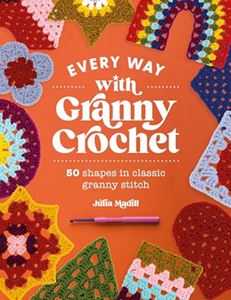 Every Way with Granny Crochet by Julia Madill
Most granny square books offer patterns for squares (and only squares), in one size only, using many different stitches. This book offers 50 fab shapes to crochet all using the classic ‘granny’ stitch. Think outside the box (or square, that is), grab your hook and create circles, stars, flowers and a bounty of geometric shapes. With in-depth exploration of familiar granny stitch shapes and instructions for exclusive motifs not seen elsewhere, the shape section is an invaluable resource. Each granny pattern is provided in full written form as well as easy-to-follow visual charts suitable for crocheters at any level of experience. Learn how to resize, customize and utilize the shapes to create your own original granny-gorgeous designs, from tiny ornaments to epic afghans.
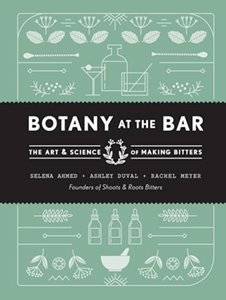 Botany at the Bar by Selena Ahmed, Ashley Duval, and Rachel Meyer
This is a bitter-making handbook with a beautiful, botanical difference–three scientists present the back stories of exciting flavors of plants from around the globe and all in a range of tasty, healthy tinctures. Botanists Selena Ahmed, Ashley Duval, and Rachel Meyer take us on an enlightening trip throughout the plant world as they share their unique expertise on the ecology, cultural practices, and medicinal properties just waiting to be discovered at the bottom of your glass. Notes on the origins of bitters, the science of taste, and phytochemistry are followed by a neat guide on how to extract and make herbal infusions at home.
New Fiction
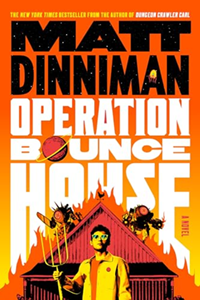 Operation Bounce House by Matt Dinniman
All colonist Oliver Lewis ever wanted to do is run the family ranch with his sister, maybe play a gig or two with his band, and keep his family’s aging fleet of intelligent agriculture bots ticking as long as possible. As a fan of Earth television and culture, he figures it will be a good thing when the transfer gate finally opens all the way and restores instant travel and full communication between Earth and his planet, New Sonora. But there’s a complication. Even though the settlers were promised they’d be left in peace, Earth’s government now has other plans. The colossal Apex Corporation is hired to commence an “eviction action.” But maximizing profits will always be Apex’s number one priority. Why spend money printing and deploying their own AI soldiers when they can turn it into a game? Why not charge bored Earthers for the opportunity to design their own war machines and remotely pilot them from the comfort of their own homes? The game is called Operation Bounce House. Oliver and his friends soon find themselves fighting for their lives against machines piloted by gamers who’ve paid a premium for the privilege. With the help of an old book from his grandfather and a bucket of rusty parts, Oliver is determined to defend the only home he’s ever known.
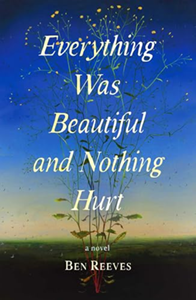 Everything Was Beautiful and Nothing Hurt by Ben Reeves
Travis is Death in the modern world. He lives with his cat in a small, gray town. His job is to offer people comfort in their final hours of life, which he does without complaint or judgement. He’s stoic, gentle, and a little naive, despite who he is, but he never tries to change anyone’s fate. He is responsible for maintaining the balance of nature, and every life must eventually end. Then Travis meets Dalia, a midwife, and her boisterous eight-year-old daughter Layla, who live across the hall, and despite his best attempts to keep his distance, he finds himself wholeheartedly embraced by other people for the first time. So it is with this seemingly unremarkable family that Travis begins to understand what it means to be truly alive—and what might be irrevocably lost in death.
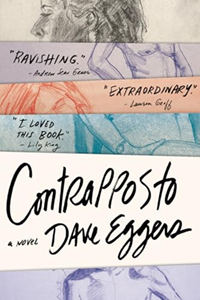 Contrapposto by Dave Eggers
Cricket Dibb, born on the American prairie, has no particular prospects or ambitions until, in grade school, he realizes he can draw. He soon meets a girl, Olympia Argyros, one year older, who is captivating and brilliant and far more worldly. All through their lives, Cricket sees Olympia as his soulmate and destiny, and while she is always his champion, romantically her eyes are always seeking something—and someone—else. Their love changes over the decades, but their commitment to each other, and their search for meaning in the making of art, never wanes. The novel spans the globe, from New York to Thailand, Indiana to Paris, and follows Cricket and Olympia through sickness and health, war and death. The novel is a wild and beautiful examination of the rules and market forces of the art world, but chiefly it’s about two friends who believe they can change that world, and bring new meaning to it, if only they can start their own movement, dodge charlatans, remain open-eyed and open-hearted, avoid going mad, avoid dying young of rare cancers, stay true to their ideals, and never tire of beauty. Not easy, but not impossible, either.
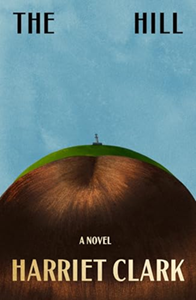 The Hill by Harriet Clark
Suzanna Klein was a baby when her mother got up early one morning to rob a bank with a group of fellow radicals. Now, every Saturday, Suzanna lines up at the prison gates along with the other visiting children, each one dressed as if for celebration. Inside the gates are a nursery and a cemetery, watchful guards and distractible nuns, women counting down to release and women like Suzanna’s mother, who will never be released. Suzanna is raised by her grandmother, who is entirely unforgiving of her daughter’s crime and refuses to visit the prison. Her grandmother’s friends know one another from their years in the Communist Party and still spend extended cocktail hours debating the Hitler–Stalin Pact. Though these women once insisted on changing the world, they are torn between teaching Suzanna how the world works and shielding her from it.
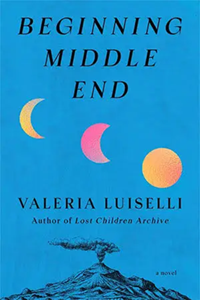 Beginning Middle End by Valeria Luiselli
This story begins when a mother and her daughter take off on a trip. It is a summer of rapidly changing winds, volcanic rumbles, and sudden tempests. They’ve landed in Sicily, near the ancient ruins where the mother’s grandmother worked long ago on an archaeological dig. The narrator’s marriage has collapsed, her mother is losing her memory, and her daughter is on the threshold of adolescence, starting to ask difficult questions and form complex memories. How do you begin again? the narrator wonders, pondering her family line. How do you begin again if you got the beginning wrong? While the mother tries to figure out how to reconstruct their lives as a duo—cooking meals side by side, reading out loud to each other, playing chess, bickering and making up—her daughter takes the reins of the story, and their journey soon becomes a quest for origins, not just to the familial past across continents, languages, and generations, but also farther back, to a mythical and even geological past.
Summaries and images adapted from publishers.