
To find these selections and many other new titles, see the NMC library catalog.
New Non-Fiction
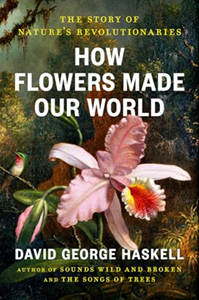 How Flowers Made Our World by David George Haskell
We live on a floral planet, yet flowers don’t get the credit they deserve. We admire them for their aesthetics, not their world-changing power. Inspired by the most up-to-date scientific research, David George Haskell observes, smells, and studies flowers such as magnolias, orchids, and roses, as well as fascinating but less well-known flowers such as seagrasses, to show us what we’ve been missing. Flowers are beautiful revolutionaries. When they evolved, they remade the natural world: They used beauty to transform former enemies into cooperative partners. They reinvented plant growth, sex, and motherhood. Through radical genetic flexibility, they turned past environmental upheavals into opportunities for renewal. This inventiveness allowed them to build and sustain rain forests, savannahs, prairies, and even ocean shores. Without flowers, human beings would not exist.
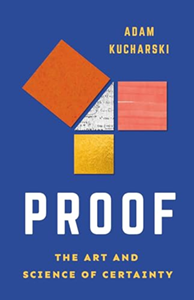 Proof by Adam Kucharski
For thousands of years, from the ancient Greeks to the Arabic golden age to the modern world, science has used different methods–logical, empirical, intuitive, and more–to separate fact from fiction. But it all had the same goal: find perfect evidence and be rewarded with universal truth. As mathematician Adam Kucharski shows, however, there is far more to proof than axioms, theories, and laws: when demonstrating that a new medical treatment works, persuading a jury of someone’s guilt, or deciding whether you trust a self-driving car, the weighing up of evidence is far from simple. To discover proof, we must reach into a thicket of errors and biases and embrace uncertainty–and never more so than when existing methods fail. Spanning mathematics, science, politics, philosophy, and economics, this book offers the ultimate exploration of how we can find our way to proof–and, just as importantly, of how to go forward when supposed facts falter.
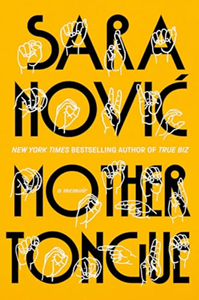 Mother Tongue by Sara Nović
Sara Nović’s early years were steeped in music, Bible study, and a strong desire to fit in. But when she failed her school’s mandated hearing test, her worldview was thrown into chaos. Desperate not to be marked as different, she told no one, staying in the hearing world for as long as she could by brute force. Eventually unable to ignore the fact that she was deaf, Nović sought out other deaf people and was welcomed into a tight knit community rooted in the beauty and joy of American Sign Language. Nović realized that rather than maintaining the facade of her old life or trying to straddle two worlds, she would need to cultivate an existence in the space between. Now the mother of two young sons-one, biological and hearing, the other, adopted and deaf-Nović reflects on her life both before and after parenthood.
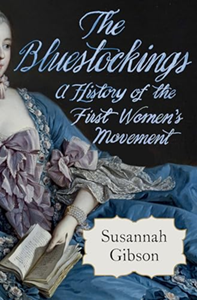 The Bluestockings by Susannah Gibson
In England in the 1700s, a woman who was an intellectual, spoke out, or wrote professionally was considered unnatural. After all, as the wisdom of the era dictated, a clever woman—if there were such a thing—would never make a good wife. But a circle of women called the Bluestockings did something extraordinary: coming together in glittering salons to discuss and debate as intellectual equals with men, they fought for women to be educated and to have a public role in society. In this intimate and revelatory history, Susannah Gibson delves into the lives of these pioneering women. In elegant prose, Gibson reveals the close and complicated relationships between these women, how they supported and admired each other, and how they sometimes judged and exploited one another. Some rebelled quietly, while others defied propriety with adventurous and scandalous lives.
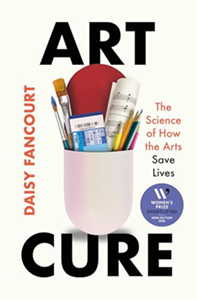 Art Cure by Daisy Fancourt
From cradle to grave, engaging in the arts has remarkable effects on our health and well-being. Music supports the architectural development of children’s brains. Artistic hobbies help our brains to stay resilient against dementia. Dance and magic tricks build new neural pathways for people with brain injuries. Arts and music act just like drugs to decrease depression, stress, and pain, reducing our dependence on medication. Going to live music events, museums, exhibitions, and the theater decreases our risk of future loneliness and frailty. Engaging in the arts improves the functioning of every major organ system in the body, even helping us to live longer. This isn’t sensationalism, it’s science: the results of decades of studies gathering data from neuroimaging, molecular biomarkers, wearable sensors, cognitive assessments, and electronic health records.
New Fiction
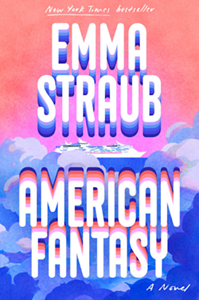 American Fantasy by Emma Straub
When the American Fantasy cruise ship sets sail for a four-day themed voyage, aboard are all five members of a famous 1990s boyband, and three thousand screaming women who have worshipped them for thirty years. Newly divorced and with an empty nest, Annie is on board as a lark to appease her sister. Once a diehard fan of the band as a teen, her tastes have matured, and she feels out of place amid the sea of bedazzled, air-brushed t-shirts bearing the singers’ faces. Yet when the lights come up and the idols of her youth begin to sing before her, something is unlocked. Between the slushy alcoholic drinks, the music of her youth, and the thousands of middle-aged women acting like lovesick teenagers, Annie finally reconnects to a long-submerged part of herself. By the time she comes in contact with Keith, the band’s slightly depressed, fifty-something lead singer – not just a celebrity but someone clearly in need of a friend – she feels like anything is possible. But a lot can go wrong on a ship ruled by hormones and hope, frustration and fantasy.
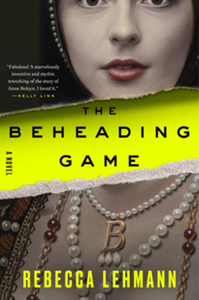 The Beheading Game by Rebecca Lehmann
The Beheading Game begins in the hours after Anne Boleyn’s beheading, when she wakes to find herself unceremoniously laid to rest in a makeshift coffin, her head wrapped in linen at her knees. Discarded by King Henry VIII for being unable to give him a male heir and reviled by Cromwell for being too smart for her own good, she was ultimately executed based on trumped-up charges of adultery, incest, and high treason. Anne escapes the Tower of London, sews her head back on, then sets out on a quest to kill Henry VIII before he can marry her own lady-in-waiting Jane Seymour. The stakes are high—if Jane gives birth to a rival heir, Anne’s daughter, Elizabeth, will lose her claim to the throne. Traveling the streets of London in the guise of a commoner, with the help of a prostitute who becomes a trusted friend (and perhaps something more), Anne soon realizes how little she knew about life in the real world.
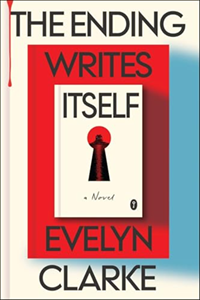 The Ending Writes Itself by Evelyn Clarke
Arthur Fletch, one of the world’s bestselling novelists, is a reclusive genius known for his iconic protagonists and fiendish twists. When six struggling authors are invited to spend a weekend on his private Scottish island, they arrive to discover a shocking secret: Arthur Fletch is dead . . . and his last book is unfinished. Desperate to publish the novel, Fletch’s agent and editor have summoned these writers in the hope that one of them will imagine a worthy ending for this final book. To sweeten the deal, they are offering an irresistible prize: in addition to ghost-writing the last chapter––for a mind-boggling sum––they will also help the lucky writer successfully re-launch their own career, guaranteeing future bestsellers. The catch: the writers have just seventy-two hours to finish Fletch’s magnum opus. It’s the perfect plot. All it needs is a killer ending.
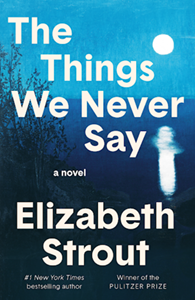 The Things We Never Say by Elizabeth Strout
Artie Dam is a man with a secret. He goes about his days teaching American history to high schoolers, correcting their casual ignorance, and lending a kind word to those who need it most. He spends his free time sailing the beautiful Massachusetts Bay, or with his adult son and his wife of more than three decades – and as Artie does these things, he plans the event that will forever change the world he inhabits. But when a startling accident awakens a new perspective in Artie, and he realizes that life has its own secret it’s been keeping from him – he charts another course full of grief, hilarity, and heart, to a place where the end marks the beginning. Strout delivers a profound exploration of the human condition – one that brims with deep compassion for each and every one of her characters. With exquisite prose and gentle intimacy, Artie Dam takes one man’s fears and loneliness and makes them universal. And in the same breath, captures the mysterious love that sustains and holds us through it all.
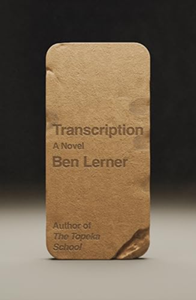 Transcription by Ben Lerner
The narrator has traveled to Providence, Rhode Island, where he is to conduct what will be the final published interview with Thomas, his ninety-year-old mentor and the father of his college friend Max. Thomas is a giant in the arts who seems to hail from the future and the past simultaneously and who reenchants the air when he speaks. But the narrator drops his smartphone in the hotel sink. He arrives at Thomas’s house with no recording device, a fact he is mysteriously unable to confess. What unfolds from this dreamlike circumstance is the unforgettable story of the triangle formed by Thomas, Max, and the narrator, and an exploration of fathers and sons, male friendship and rivalry, and the challenges of parenting in a burning world. One of the first great novels about the early days of Covid, it is also a brilliant meditation on those technologies that enrich or impoverish our connection to one another, that store or obliterate memory.
Summaries and images adapted from publishers.