
To find these selections and many other new titles, see the NMC library catalog.
New Non-Fiction
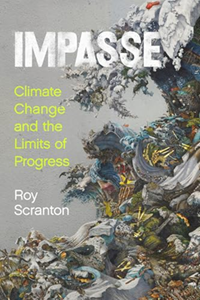 Impasse by Roy Scranton
Extreme heat, fires, floods, and storms are transforming our planet. Yet instead of serious responses from world leaders, we get increasing emissions, divisive politics, and ersatz solutions that offer more of the same: more capitalism, more complexity, more “progress.” The impasse we face is not only political and institutional, but cognitive, existential, and narrative. We’re incapable of grasping the scale, speed, and impact of global warming. Our brains can’t make sense of how radically our world is changing. And we optimistically cling to a civilizational narrative that promises a better tomorrow if we just keep doing what we’re doing. It’s well past time, Roy Scranton argues, to free ourselves from our dangerous and dogmatic faith in progress. Such unwarranted optimism will only accelerate our collective disintegration. If we want to have any hope at all for the future, it must be grounded in a recognition of human limits-a view Scranton calls ethical pessimism.
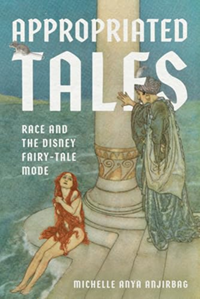 Appropriated Tales by Michelle Anya Anjirbag
Scholar Michelle Anya Anjirbag examines Disney’s method of fairy-tale storytelling to determine how the corporation has shaped public understanding of what fairy tales are and who belongs within them. Covering a span of years “from mermaid to mermaid”–from the 1989 animated The Little Mermaid to the 2023 live-action remake starring Halle Bailey–Anjirbag deconstructs and interrogates Disney’s corporate commodification of multiculturalism and diversity, centering its impact on misrepresented people and cultures over the stated intentions of the producers. Further, she demonstrates that Disney shapes childhood experiences and imagination in a way that strategically promotes American cultural imperialism. Through close film analysis, applied critical theory, and social analysis of the Disney corporation, Anjirbag unearths a new framework for studies of Disney fairy tales and how they shape popular culture.
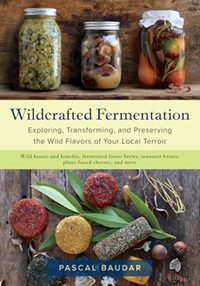 Wildcrafted Fermentation by Pascal Baudar
Pascal Baudar provides all the basic information one needs to make creative ferments at home. From simple wild sauerkrauts and kimchis, to hot sauces, savory pastes, plant-based cheeses, dehydrated spice blends, and much more, Baudar includes over 100 easy recipes that will inspire even the most jaded palate. Wild-gathering greens, stems, roots, berries, fruits, and seeds, each in their season, is a great way to work with your local environment and reconnect with nature in a deeply rewarding and positive way. The recipes are adaptable for people who purchase seasonal and local produce, or harvest from the garden. Knowing the basic methods of fermentation, as well as specific techniques like how to cut and prepare different kinds of plants, provides the confidence to succeed like a pro, the first time and every time. And step-by-step photos of processes and finished dishes will inspire the adventurous home cook to experiment with both wild and cultivated plants.
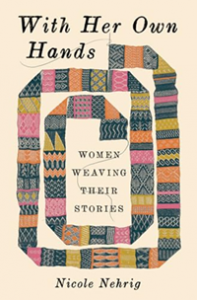 With Her Own Hands by Nicole Nehrig
Knitting, sewing, embroidery, quilting throughout history, these and other forms of textile work have often been dismissed as merely ‘women’s work’ and attached to ideas of domesticity and obedience. Yet, as psychologist and avid knitter Nicole Nehrig wonderfully explores in this captivating book, textile work has often been a way for women to exercise power. When their voices were silenced and other avenues were closed off to them, women used the tools they had often a needle and thread to seek freedom within the restrictive societies they lived in. Spanning continents and centuries, this project brings together remarkable stories of women who have used textiles as a means of liberation, from an eighteenth-century Quaker boarding school that used embroidered samplers to teach girls math and geography to the Quechua weavers working to preserve and revive Incan traditions today.
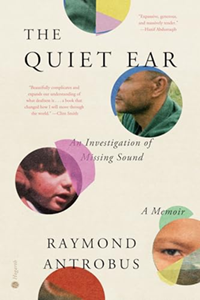 The Quiet Ear by Raymond Antrobus
At the hospital where Raymond Antrobus was born, a midwife snapped her fingers by his ears and gauged his response. It was his first hearing test, and he passed. For years, Antrobus lived as a deaf person in the hearing world, before he was diagnosed at the age of six. This “in-betweenness” was a space he would occupy in other areas of his life too. The son of a Jamaican father and white British mother, growing up in East London, it was easy for him to fall through the cracks. Growing up, he was told that he wasn’t smart enough, wasn’t black enough, wasn’t deaf enough. It was only when he was fitted with hearing aids at the age of seven, that he began to discover his missing sounds: the high pitches of whistles, birds, alarms, the “sh, ch, ba, th” sounds in speech — all of it missing. This memoir is an attempt to fill in those missing sounds in Antrobus’ own life, and how they formed his hybrid deaf identity.
New Fiction
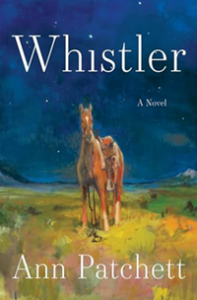 Whistler by Ann Patchett
When Daphne Fuller and her husband Jonathan visit the Metropolitan Museum of Art, they notice an older, white-haired gentleman following them. The man turns out to be Eddie Triplett, her former stepfather, who had been married to her mother for a little more than year when Daphne was nine. Now fifty-three, Daphne hasn’t seen Eddie for many years, not since the fateful event that changed the direction of both their lives. Meeting again, time falls away; while their relationship was brief, it had a profound impact on them both, and now that they are reunited, they have no intention of ever being separated again. This is a story about two adults looking back over the choices they made, and the choices that were made for them. It’s about bravery, memory, the often small yet consequential moments that define our lives, and the endless stream of loss that in time comes for us all.
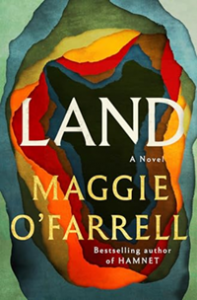 Land by Maggie O’Farrell
On a windswept peninsula stretching out into the Atlantic, Tomás and his reluctant son, Liam, are working for the great Ordnance Survey project to map the whole of Ireland. The year is 1865, and in a country not long since ravaged and emptied by the Great Hunger, the task is not an easy one. Tomás, however, is determined that his maps will be a record of the disaster. The British soldiers in charge are due to arrive any day, expecting the work to be completed, but Tomás is unexpectedly sent off course by an unsettling encounter in a copse. His life, and the lives of those of his family, will never be the same again. Liam is terrified by the sudden change in his taciturn father. What was it that caused such cracks to open in Tomás, and how is Liam, aged only ten, going to finish the mapping and get them both home? This is a novel about separation and reunion, tragedy and recovery, colonization, and rebellion.
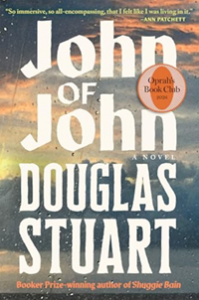 John of John by Douglas Stuart
Out of money and with little to show for his art school education, John-Calum Macleod takes the ferry back home to the Isle of Harris to find that little has changed except for him. He returns to the windswept croft and the two pillars of his childhood: his father John, a sheep farmer, tweed weaver, and lay preacher in the local Presbyterian church, and his maternal grandmother Ella, a profanity-loving Glaswegian whose steady warmth helped Cal weather the sudden departure of his mother. Cal privately wonders if any lonely men might be found on the barren hillsides of home, while John is dismayed by his son’s long hair, strange clothes, and seeming unwillingness to be Saved. But Cal isn’t the only one in the croft house who is keeping secrets. As lambing season turns to shearing season, the threads holding the community together become increasingly frayed, and nothing will remain as it was before.
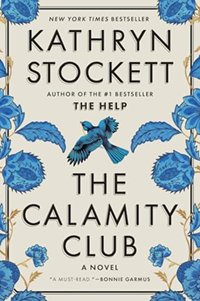 The Calamity Club by Kathryn Stockett
In 1933 Oxford, Mississippi, Prohibition is on the wane, and the Great Depression is tightening its grip. Poor and rich folks alike have fallen on hard times, even as the old social order remains. For women on the margins, the options are few and the price of dignity and self-determination is unbearably high. Eleven-year-old Meg, one of the unadoptable “big girls” at the Lafayette County Orphan Asylum, fights each day to keep her spirit unbowed. Birdie, unmarried and outspoken, has come to Oxford on a mission to ask her social-climbing sister to help the struggling family she’s left behind. And Charlie is a woman with a past, running low on luck but driven by fire, fury, and grit. When their fates converge, they come up with an audacious plan to take back control of their lives. Together, they form an unlikely sisterhood—but in a place and time where hypocrisy is rife, women’s freedom is fragile, and making an enemy can have dire consequences, will the price they pay for their outrageous risk-taking be too high?
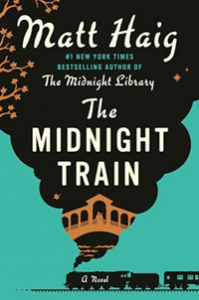 The Midnight Train by Matt Haig
When your life flashes before your eyes, what will matter most? For Wilbur, it was his time with Maggie, the love of his life. Their honeymoon in Venice. Before he threw it all away. Years later, on the brink of his own death, a train arrives. It can take Wilbur back in time to relive his most important moments. Soon, he realizes just how much he would have changed…But is it already too late? An adventure through time, this novel is full of wonder and transformation, a story of love and second chances, from the world of The Midnight Library.
Summaries and images adapted from publishers.